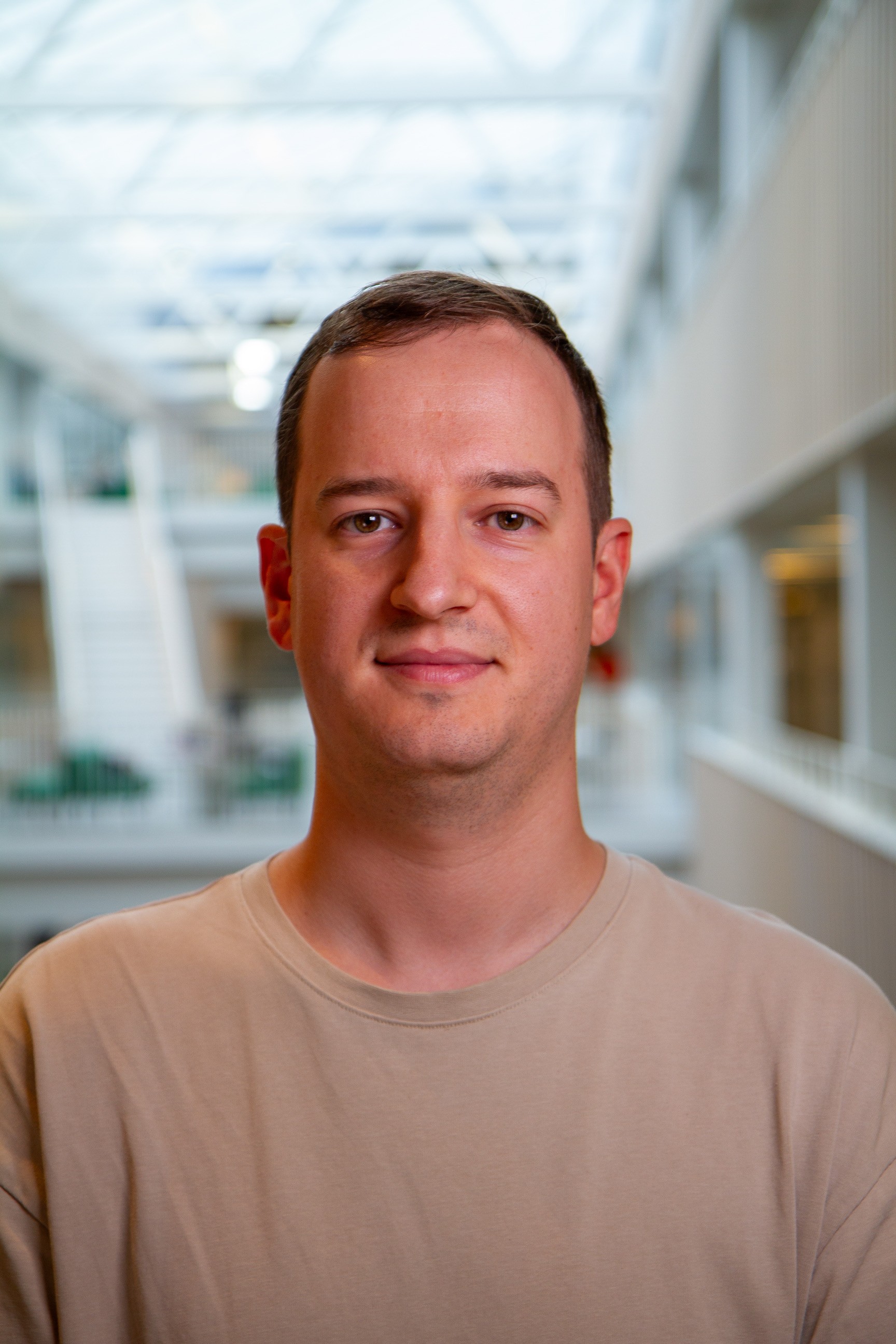
Simone Bendazzoli, PhD
Building medical AI infrastructure that reaches the clinic.
MLOps & Kubernetes Platform Engineer · Medical AI Infrastructure
PhD in Medical Technology from KTH Royal Institute of Technology and Karolinska Institutet. I design and operate platforms that help medical AI move from research prototypes into clinical research workflows.
Story
Bridging AI innovation and clinical practice
I began my PhD in October 2020 focusing on medical image processing with deep learning — a field that evolved quickly but still struggles with real-world clinical adoption. Working at the intersection of AI research and medical practice made clear how hard it is to integrate models into clinical workflows in a transparent, reproducible, and scalable way.
That realization led me to design and build MAIA, an open-source Medical AI platform that promotes collaboration and reproducibility. MAIA integrates Kubernetes, MONAI, and the MONAI Bundle format to simplify deploying and updating AI models in distributed research environments, with tools such as 3D Slicer, OHIF Viewer, Orthanc, XNAT, and MLFlow.
I defended my PhD thesis at KTH on November 27, 2025: “Design and Integration of AI Solutions in Oncology and Healthcare Infrastructures: Bridging the Gap Between AI Innovation and Clinical Practice.” The work covered MAIA, the MONet Bundle, and advances in federated and active learning.
Thesis: KTH DiVA · KI Open Archive · Defense recording
When I am not coding or shaping infrastructure, I am usually out running. Follow along on Strava.
Experience
Professional path
- 2026–present Application Engineer — Karolinska University Hospital, Stockholm
Led deployment of MAIA on hospital OpenShift for retrospective clinical imaging studies; collaborating with Radiance and clinical teams on AI integration, including an agentic framework for radiology report generation.
- 2026–present Principal Systems Engineer — AIDA Data Hub, Linköping
Architecting secure research environments for the Data Science Platform — EHR databases, secure remote desktops, PACS, and DICOM viewers for regulated multi-institutional imaging research.
- 2020–2026 PhD in Medical Technology — KTH & Karolinska Institutet
Deep learning for oncology: tumor segmentation, cancer detection, and prognosis, with AI tools integrated into clinical research workflows.
- 2021–present Main Developer & Maintainer of MAIA — KTH & Karolinska
Built scalable, modular Kubernetes infrastructure with CI/CD for reproducible Medical AI development and deployment across academic and clinical settings.
- 2018–2022 Software Developer — Novamia AB, Stockholm
Medical image visualization and processing optimized for deep learning inference with ONNX and TensorRT.
Education
- PhD in Medical Technology KTH Royal Institute of Technology & Karolinska Institutet, Sweden
- MSc in Bioengineering Padua University, Italy
- BSc in Biomedical Engineering Padua University, Italy
Publications & talks
Selected writing and presentations
- 2025 MAIA: A Collaborative Medical AI Platform for Integrated Healthcare Innovation, npj Artificial Intelligence. Article
- 2025 MONet-FL: Extending nnU-Net with MONAI for Clinical Federated Learning, LNCS / MICCAI DeCaF (oral).
- 2024 Lung vessel connectivity map as anatomical prior knowledge for deep learning-based lung lobe segmentation, Journal of Medical Imaging.
- 2024 BT RetinaUNet – self-supervised framework for enhancing lymphoma detection in whole-body PET/CT, CARS Barcelona (oral).
- 2023 Segrap2023: A benchmark of organs-at-risk and GTV segmentation for nasopharyngeal carcinoma, Medical Image Analysis.
- 2022 PriorNet – lesion segmentation in PET-CT including prior tumor appearance information, MICCAI AutoPET (oral).
Also: teaching assistant for Deep Learning in Medical Image Processing (KTH), and supervisor for MSc theses on PET/CT lymphoma segmentation, indolent lymphoma classification, and federated learning. More on MINNELab profile · Browse projects.